








 Bogdan Cretu
 72% of global browser usage is on Chrome, which means a single company still shapes a massive slice of how tracking works online. At the same time, 94% of data and advertising decision-makers say third-party cookies will eventually disappear. Those two numbers sum up the problem every advertiser is facing right now: the cookie jar is closing.
For crypto marketers who’ve built campaigns around hyper-targeted behavioral data, the shift toward privacy-first advertising can feel like a storm on the horizon. When third-party cookies are finally phased out, how can you still effectively reach crypto investors, DeFi users, or NFT enthusiasts without compromising precision or performance?
And let’s be honest, most crypto brands aren’t ready. But here’s the good news: the end of cookies doesn’t mean the end of performance marketing. It marks the beginning of smarter, trust-based, and context-driven strategies. And Coinzilla is already positioned to help crypto marketers steer that transition with confidence.
Cookies Are Fading Out, and Data Silos Are Growing
Third-party cookies were never perfect, but they made user tracking easy. Advertisers could follow people around the internet, build lookalike audiences, and personalize campaigns down to the last click. However, that era is closing fast.
Google Chrome still holds around 72% of the global browser market share and was originally planned to phase out third-party cookies by 2025, although we are now approaching 2026, and the rollout will likely be delayed. Safari and Firefox already did. Combine that with GDPR, CCPA, and global privacy laws tightening the screws, and suddenly the old behavioral targeting playbook looks like a liability.
For crypto marketers, it’s an even tougher game. Crypto audiences already skew privacy-conscious. They use VPNs, ad blockers, and privacy browsers like Brave. Relying on third-party tracking in this niche isn’t only risky but also ineffective.
The question isn’t if the third-party cookies will go away, but how you’ll adapt when they do.
These changes are already reshaping the industry, and the latest crypto advertising trends in 2025 show that advertisers are shifting toward contextual targeting, Web3 audiences, and performance-based crypto ad networks.
Why This Shift Hurts Crypto Marketers More Than Anyone
Let’s call it what it is: crypto audiences are slippery.
They’re global, anonymous, multi-wallet users spread across platforms that often don’t share data. Behavioral targeting helped connect the dots. Without it, you risk paying for reach that doesn’t convert.
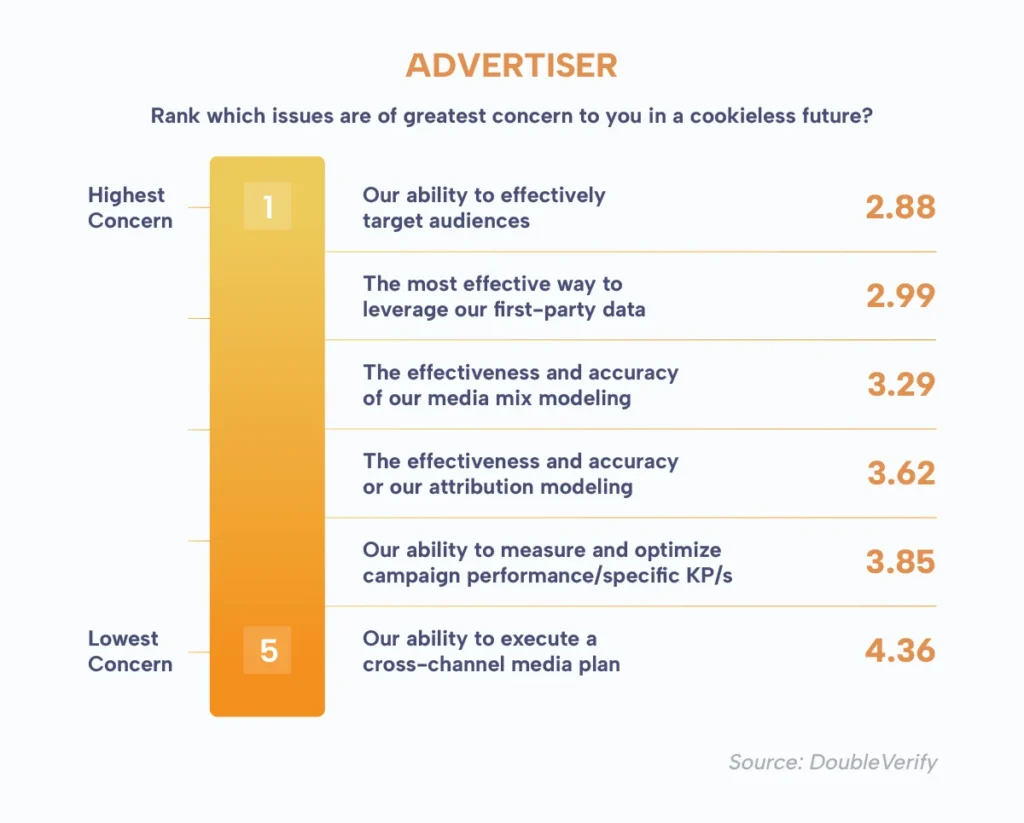
According to a 2023 survey by DoubleVerify, 30.5% of advertisers listed “our ability to target audiences effectively” as one of their biggest concerns in a future without third-party cookies. And in crypto? That number might be even higher, given fragmented audiences and stricter ad policies from mainstream networks.
If your targeting relies on pixel tracking, retargeting, or cross-platform behavioral data, you’re in for a wake-up call.
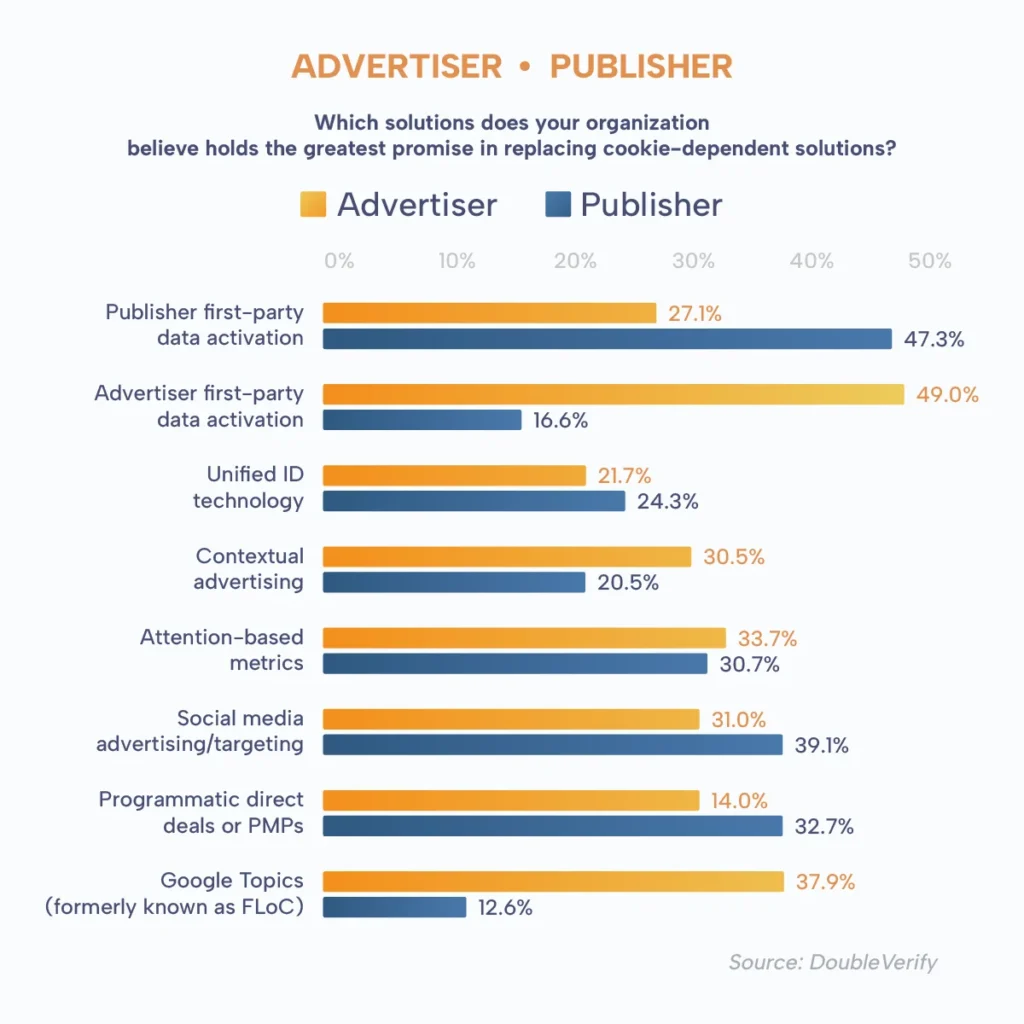
Without proper adaptation, post-cookie advertising could mean:
- Higher CPAs due to poor audience precision.
- Lower CTRs as creative relevance drops.
- Missed insights because attribution models break down.
Crypto advertisers can’t afford that. Margins are tight, competition is fierce, and audiences have zero patience for irrelevant ads.
Privacy Doesn’t Kill Performance. It Redefines It
Let’s reset the perspective. Privacy-first doesn’t mean the death of targeting; on the contrary, it means the rebirth of context and trust.
The most successful post-cookie advertisers will be the ones who:
- Build first-party data ecosystems.
- Use contextual intelligence instead of behavioral stalking.
- Partner with networks that already value transparency and compliance.
That’s where Coinzilla comes in.
Why Coinzilla Is Built for the Privacy-First Future

Coinzilla doesn’t rely on cookies for user targeting at all. Publishers within the network can leverage their own first-party data to create interest-based segments. Coinzilla then enables advertisers to access these curated audiences responsibly.
Therefore, the platform’s campaigns are built around site-level placements, rather than personal data. That approach already aligns with the privacy-first direction of digital advertising.
- Contextual Relevance – Ads appear on crypto-focused websites where users already explore blockchain content. The environment itself creates relevance, rather than relying on cross-site user tracking.
- Verified Publishers – Coinzilla collaborates with vetted cryptocurrency publishers that meet high-quality and compliance standards. Publishers can shape audience segments using their own first-party data, thereby avoiding the need for external tracking methods.
- Clear Metrics – Advertisers see impressions, CTR, and spend allocation with no hidden layers. Simple reporting becomes more valuable as cookie-based attribution becomes less accurate.
- First-Party and On-Chain Signals – First-party identifiers replace third-party cookies, allowing publishers to create privacy-safe audiences. Coinzilla already supports collaborations built on publisher-owned signals and can integrate additional context from on-chain behavior in a privacy-safe way.
How Crypto Marketers Can Adapt Now

You don’t have to wait for Google’s final phase-out to prepare for the post-cookie world. The reality is that cookies will not disappear completely. Only third-party cookies (the ones that allow advertisers to track users across multiple websites) are being eliminated.
First-party cookies, those created and stored by the websites users visit, will remain. They will continue to play an important role in helping publishers and brands understand on-site behavior, measure engagement, and personalize experiences responsibly. In other words, data isn’t going away; it’s simply becoming more controlled and more transparent.
In a cookieless environment, choosing the right crypto ad formats becomes even more important because format selection directly impacts visibility, engagement, and conversion rates.
The advertisers who thrive will be those who understand this shift and align early with privacy-compliant practices. Here’s how to do that:
1. Focus on First-Party Relationships
First-party data is your most valuable asset in a privacy-first world. Instead of relying on external trackers, build direct, meaningful relationships with your audience.
Encourage users to subscribe to newsletters, sign up for account-based experiences, or join community hubs like Discord or Telegram. You can also collect first-party insights tied to crypto behavior, such as on-site wallet connections, transaction patterns, preferred chains, token holdings users choose to reveal, and engagement with specific on-chain tools on your platform. These touchpoints help you gather insights that are yours, collected with consent and used responsibly.
Unlike third-party cookies that disappear once a user leaves another site, first-party cookies on your own platform remain intact. They help you understand how your audience interacts with your content and products, including wallet-based actions that signal real interest inside your ecosystem.
2. Embrace Contextual Placement
Stop chasing individuals around the internet and start appearing where your audience is already paying attention.
If your goal is to reach DeFi traders, advertise on analytics platforms or trading education sites. When speaking to NFT creators, choose NFT-focused publishers and marketplaces. The message performs better when it appears next to content that matches the user’s intent in real time.
Coinzilla already follows this model. Campaigns are built around contextual placement on crypto-related websites, not user-based tracking. That means your ads reach relevant readers through their environment, not through personal identifiers. This approach is exactly what privacy-first advertising will look like in practice.
3. Support Privacy-Compliant Audience Creation
While third-party cookies are disappearing, first-party cookies will enable publishers to build curated audiences based on on-site behavior.
Imagine a crypto publication grouping readers who regularly view Ethereum articles into an “Ethereum Enthusiasts” segment. That publisher can then offer this privacy-safe audience to advertisers through approved frameworks. These audiences are built by the publishers themselves, not by external data brokers, making them both compliant and accurate.
Coinzilla’s publisher network perfectly aligns with this evolution.. Its verified partners can use their own first-party data to identify interest clusters within crypto niches and make those segments available for advertisers in a transparent, privacy-respecting way.
The result is smarter targeting powered by collaboration between advertisers and publishers, not surveillance across the web.
4. Prioritize Brand Safety and Compliance
As privacy standards rise, so do expectations for responsibility and transparency. Crypto advertising is already heavily regulated, so compliance cannot be optional.
Partnering with a network designed for the crypto industry simplifies that process. Coinzilla works exclusively with verified publishers that follow regional advertising regulations and provide a secure environment for brands. This commitment protects advertisers from fraud, misinformation, and policy violations.
Regulatory pressure also plays a role in this shift. New policies and global frameworks continue to redefine how digital assets can be promoted online, which we explained in our guide to crypto advertising regulations.
Thus, in a privacy-first world, brand safety and compliance become the foundation of credibility.
5. Test Privacy-Safe Analytics Early
Measurement is changing, too. The industry is moving toward privacy-safe analytics, where insights are drawn without exposing personal data.
Explore clean-room measurement solutions and first-party attribution models that rely on aggregated or anonymized data. These methods allow you to evaluate campaign performance without violating user privacy.
The sooner you test these tools, the easier it will be to maintain strong performance once third-party cookies are gone. The goal is not to replace one tracking method with another, but to develop new measurement habits that strike a balance between privacy and precision.
The Bigger Picture: The Post-Cookie Era Is an Opportunity
Privacy rules are changing how digital advertising works, but the shift creates room for better collaboration between advertisers and publishers. Instead of collecting data from everywhere, the industry is moving toward partnerships built on first-party signals and context.
What grows from this shift is simple. Publishers assume a more prominent role in audience curation. Context becomes a core performance driver. Machine learning enhances how ads align with the content users are already exploring.
Coinzilla fits naturally into this direction. The platform leverages contextual placement and publisher collaboration to ensure every impression aligns with privacy expectations and audience relevance.
Final Thoughts
The privacy shift is permanent. Third-party cookies will fade away, but advertising will not collapse: it will evolve into something smarter and more ethical.
Crypto advertisers who prepare now will define the next decade of digital marketing. Those who cling to invasive tracking will struggle to maintain trust or performance.
Coinzilla serves as a bridge between traditional models and the era of privacy-first approaches. Its contextual network, publisher partnerships, and transparent framework give crypto brands a sustainable way to grow without crossing privacy boundaries.
The future of advertising is not about following people around the web. It is about showing up in the right context, in the right moment, for the right audience.
Coinzilla has already been doing that for years, and that is precisely why it will continue to lead in the post-cookie world.