







 Bogdan Cretu
 If you’ve spent time in ad forums, Discord groups, or even Slack channels, you’ve probably seen it: “What is CPM in advertising and why are we still using CPM ads in 2025?” It’s a common question, and fair enough. With CPC, CPA, CPL, and every other performance model, CPM can seem a bit… ancient.
But here’s what most people miss: those newer models still depend on impressions. No matter how you pay (per click or conversion), publishers still get rewarded when someone sees your ad. Even when you run on CPC or CPA, the platforms calculate everything back to an effective CPM to keep the system balanced.
So no, CPM isn’t outdated. It’s the baseline that keeps the entire ad economy moving. If you’re serious about scale, budget control, and predictable delivery, CPM is still the model to understand first.
In the sections that follow, we’ll explain how it works, why it’s still the industry standard, and how it impacts your campaigns.
Table of Contents
What Is CPM in Advertising?
CPM in advertising is a pricing model where advertisers pay for every 1,000 impressions their ad receives. It focuses on reach and visibility, making it the standard way publishers sell ad inventory across digital channels.
Why Everything Still Comes Down to CPM
All roads lead back to the impression-based cost (CPM ads), which is generally cheaper than other models. Publishers are paid on a CPM model, which all comes down to this trade.
Even if you opt for CPC or CPA, every ad network ultimately pays publishers based on CPM. Publishers sell ad space by the thousand-impression unit, so networks translate your clicks or conversions back into equivalent CPM to settle the bill.
Ad platforms compute an effective CPM to show the cost per thousand impressions of those clicks or conversions.
So, no matter which three-letter acronym you (want to or) go with, impressions remain the currency. Master CPM first, and the rest of your performance metrics will follow.
CPM Calculation and Formula
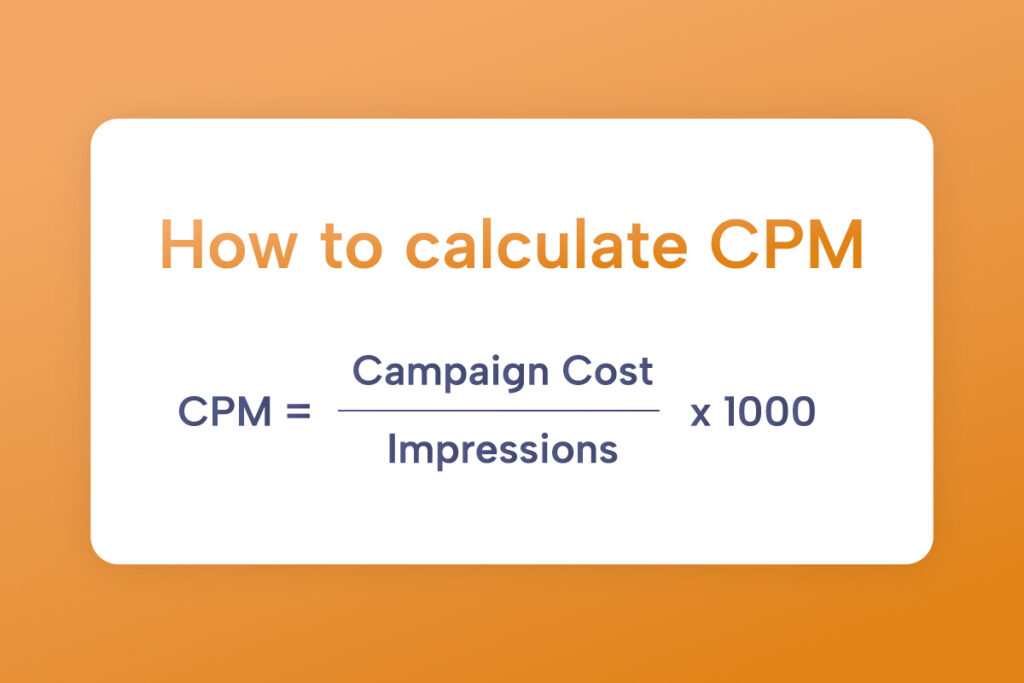
CPM advertising charges you for every 1000 times your ad appears, so your spend ties directly to audience reach.
When you launch a CPM campaign, the ad server logs each impression (one ad load in a user’s browser or app view). Once you reach 1,000 impressions, you pay the agreed CPM rate (for example, $4 CPM means $4 per 1,000 views).
Isn’t CPM an Old Model?
Sure, cost per mille (CPM) has been around since the early days of internet banner ads in the ’90s. And yes, newer acronyms like CPC, CPA, and CPV have made headlines since. But despite its age, CPM still holds the crown when it comes to planning and comparing campaigns across different channels.
And the first argument is that publishers still price their inventory based on reach. No matter how many new models enter the field, reach still matters.
Moreover, knowing your budget and target CPM, you can forecast your total impressions before hitting “launch.” No guesswork. No waiting around for CTRs to roll in.
Besides these, CPM is a universal currency for ad space. Whether you’re buying display ads, native placements, podcast shoutouts, or digital billboards, CPM gives you an apples-to-apples comparison. One metric, across the board. That means less time patching with conversion math and more time optimizing for performance.
CPM also offers a scalable structure for advertisers managing global campaigns. Average rates might vary by region or industry, but the formula remains the same. Set your CPM, divide your budget, and you’ll have a clear view of how many impressions you buy, regardless of the market.
In this section, we also want to address a rant that pops up occasionally: “Impressions are meaningless. Only clicks, calls, or sales matter.”
Sure, actions drive revenue, but without visibility, nothing happens. No impressions = no clicks. It’s like charging for coffee by the number of sips and ignoring how many cups you brewed. Doesn’t make much sense, right?
Impressions are the foundation. They’re what put your brand in front of your audience. Your CTR and conversions will stay flatlined if no one sees your creative. CPM gives you control over your stage size; the bigger the stage, the better your chances of real engagement.
Let’s not forget that people don’t always convert on first contact. They might click later, revisit your site next week, or search your brand after seeing your logo 3 times on a podcast, a banner, and a bus stop. Impressions plant the seed.
In addition, you’ve got access to advanced frequency capping and audience targeting options. So, even if the model is CPM, you still have meaningful control over your outcomes, provided the campaign is properly set up. The tools are there. It all comes down to how you use them.
CPM isn’t outdated; it’s misunderstood.
What’s a Good CPM Today?
It depends, as there’s no one-size-fits-all CPM rate. In most industries, a “good” CPM usually sits somewhere between $3 and $10, depending on the platform, format, and audience you’re targeting. Standard display ads tend to fall on the lower end of that range, while video, native, or high-engagement placements can push rates up to $25 or more.
The Google Display Network averages about $3.12 CPM, offering affordable access to wide audiences through visual ads. In contrast, Google Search Ads can reach CPMs up to $38.40 because they target users with high purchase intent, making search traffic much more valuable and expensive.
But the number alone doesn’t mean much unless you look at what you’re getting for that spend. A low CPM might feel efficient, but you’re wasting budget if it’s reaching low-quality traffic or irrelevant users.
Conversely, a higher CPM on a premium site with a highly engaged audience could drive further brand impact or performance downstream.
Now, let’s narrow the focus to fintech and crypto. Competition for attention is fierce in this niche, and users are bombarded with offers. That naturally drives up the cost of reaching them.
On Coinzilla, CPMs for premium publisher sites start at €3. These are high-quality placements on well-known crypto media platforms, where ad demand tends to be consistent and, in some cases, relatively high. So if you aim to be seen on the most significant sites, CPMs may go higher depending on current demand.
But not every campaign needs to run on premium inventory. If your goal is broad exposure or early-stage brand awareness, Coinzilla also gives access to a separate tier of smaller crypto-focused websites, with CPMs starting as low as €0.20.
That lower-cost option can help you stretch your budget, especially when testing creatives, warming up audiences, or running long-term visibility plays.
A few key factors influence CPM in fintech and crypto campaigns:
- Targeting a niche audience (like DeFi traders or institutional investors) usually costs more than reaching general crypto readers.
- Geography. The US, UK, and top-tier financial markets tend to have higher CPMs than regions with lower ad competition.
- Ad format. Video ads and native placements generally command higher rates than static banners but also drive stronger engagement.
- Timing. During bull markets or major news cycles, CPMs spike as more advertisers rush in.
Also, your campaign objective changes how you judge CPM value. If you’re focused on conversions, a higher CPM might be fine if it brings in qualified leads. If you’re just trying to get your name in front of the right eyeballs, scaling at a lower cost becomes the priority.
So what’s “good”? For premium traffic in crypto and fintech, €3–€10 is a solid benchmark. If you’re working with high-intent audiences, even €15+ can make sense. On the lower end, €0.20–€2 CPM is reasonable for awareness campaigns across smaller, relevant sites.
A good CPM isn’t about chasing the lowest number; it’s about matching cost to context. Even a slightly higher CPM can be better with the right mix of quality, targeting, and timing.
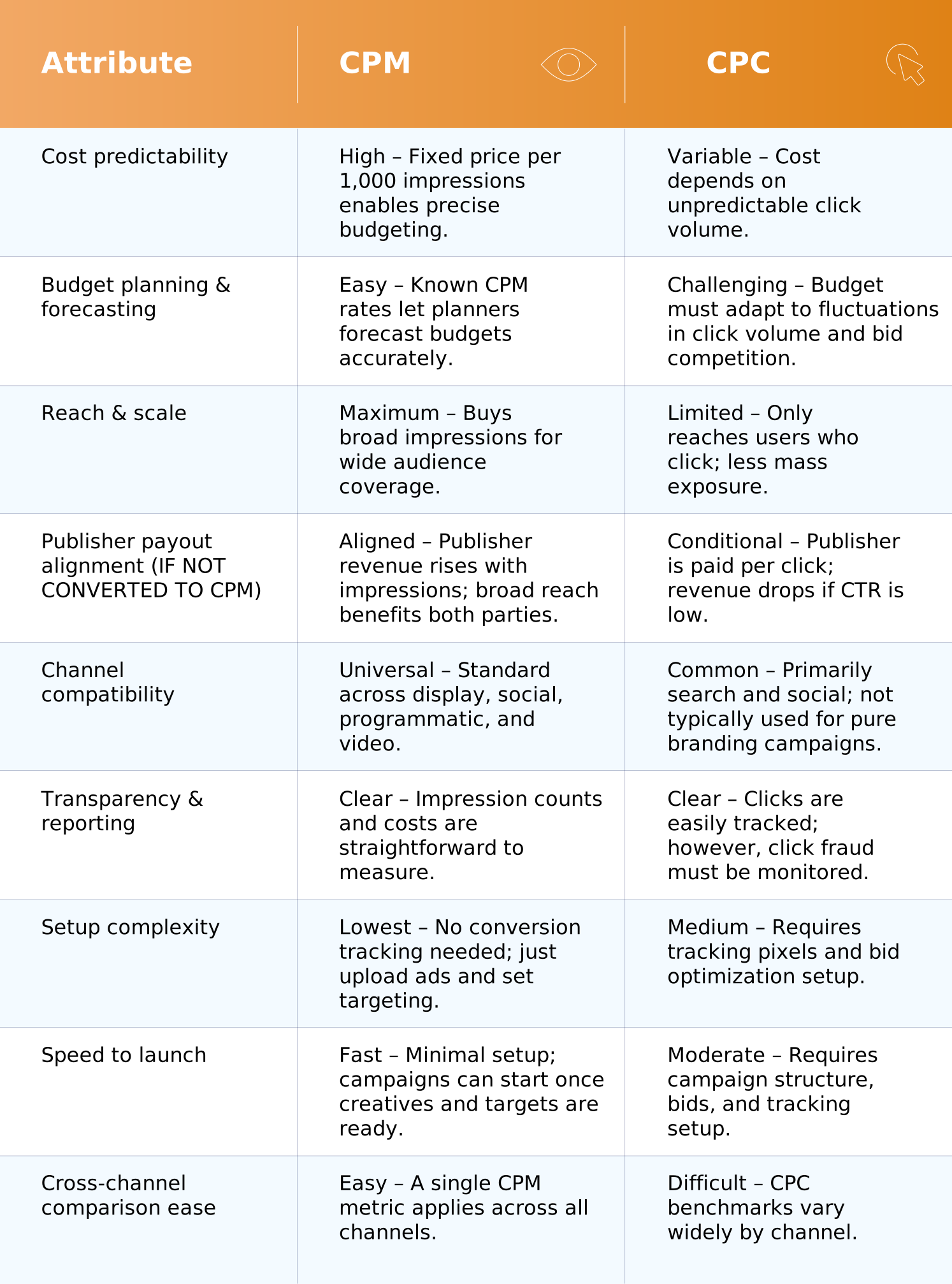
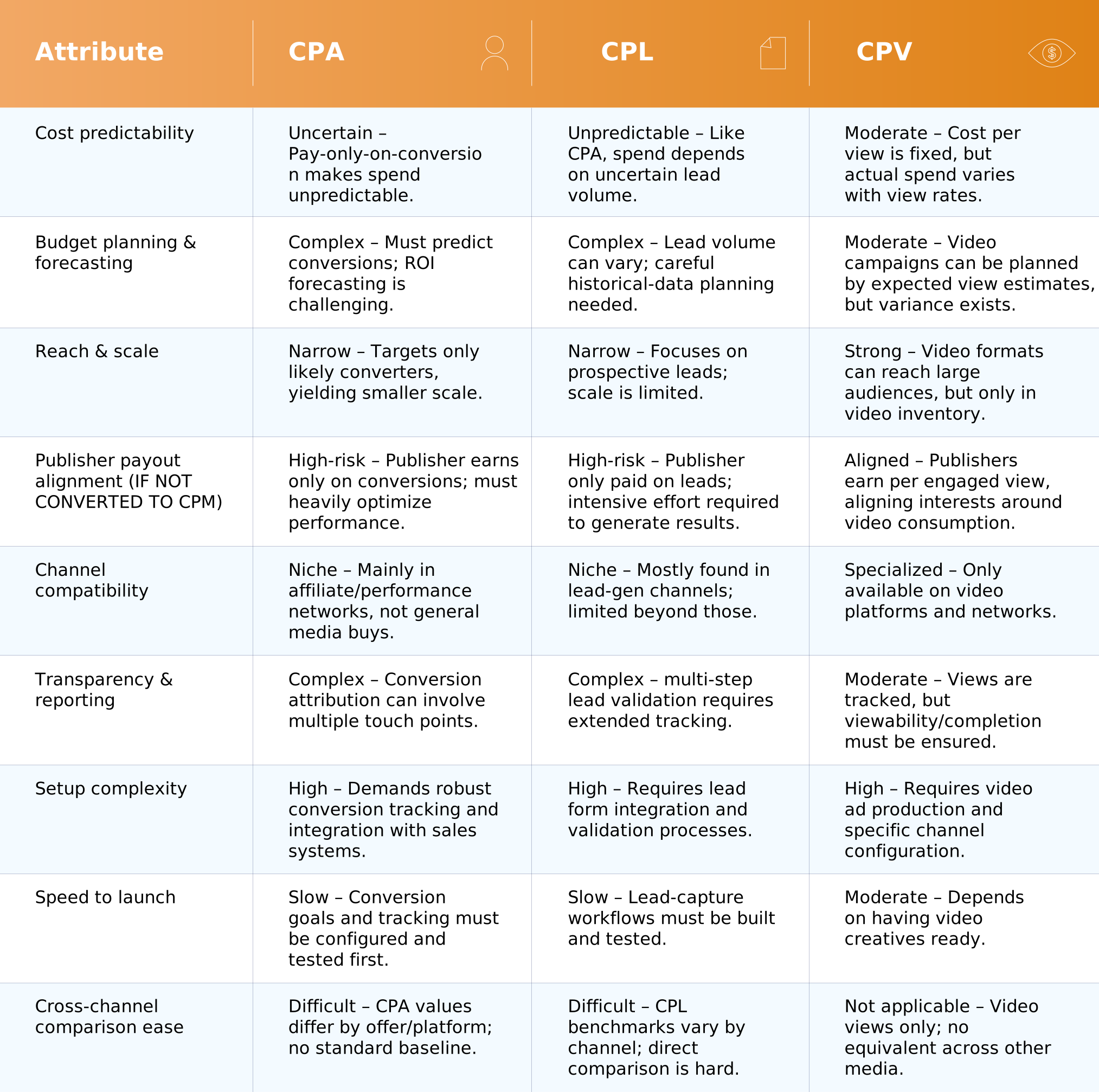
CPM vs. Other Pricing Models: CPC, CPA, and More
FAQ
CPM stands for Cost Per Mille, meaning the cost an advertiser pays for every 1,000 ad impressions (views). It is a pricing model that charges for ad exposure rather than clicks or actions.
Yes, CPM stands for the cost an advertiser pays for every 1,000 ad impressions.
Ad networks prefer CPM because most publishers (70–80%) sell inventory this way. CPM ensures predictable revenue by paying publishers for impressions, not clicks, reducing risk for both sides. Publishers earn even without user engagement, unlike CPC or CPA, making CPM the industry standard.
The average CPM for display ads varies by platform and niche but generally falls between $3 and $10. Google Display Network averages around $3.12 CPM, while Google Search Ads CPMs are much higher, often $30 to $40, due to higher-intent targeting. Facebook CPMs typically range from $6 to $8, reflecting strong audience engagement. In the fintech and crypto niche, Coinzilla offers CPMs as low as €0.20 on smaller sites and €3-€10 for premium placements.
Ads with social extensions usually have higher CPMs because they attract more attention and generate stronger engagement signals. Social proof elements like follower counts, likes, or brand interactions increase credibility and visibility, making the ad more competitive in auctions. As a result, platforms price these placements higher because they tend to deliver better performance, longer view time, and stronger brand recall than standard ads.
Final Thoughts
So, if you’re an advertiser focused on visibility, scale, and real budget control, CPM is the metric that gives you clarity upfront and reach at scale. Simple, predictable, and still the standard.
At Coinzilla, we’ve built our platform around what works. Everything starts with impressions, from premium inventory to flexible campaign types, and CPM is how we ensure your ads are seen.
Launch your next campaign on Coinzilla and get in front of the right audience from the first impression.