


 Bogdan Cretu
 Crypto projects are fighting for attention in a market where everyone has a token, everyone has a “community,” and everyone swears they’re “early.” Meanwhile, many teams still run marketing like it’s 2017: one PR blast, a few influencer posts, and then… silence.
No funnel, no sequencing, no real tracking.
Data from the Coinzilla advertising report shows that campaign strategy and budget allocation evolve with market conditions, which is why structured approaches consistently outperform random bursts.
So let’s fix that.
The guide below treats crypto marketing as a performance ecosystem, not “promotion.” Expect channels, funnel structure, real metrics, and campaign patterns pulled from active Web3 advertisers and publishers, including Coinzilla case studies with publicly shared results.
Table of Contents
The Four-Layer Crypto Marketing Framework
A crypto marketing funnel works best when it’s built like a relay race, not a solo sprint. Each stage hands off to the next, and if one breaks, the whole system underperforms. In practice, the strongest campaigns treat awareness, engagement, conversion, and retention as connected phases.
Top of Funnel: Awareness

The goal is simple: get in front of the right audience with a message they understand instantly. Thus, display campaigns across crypto publishers, broad targeting, and PR distribution all sit at this level.
To make it work, creatives need one job: stop the scroll. Performance data across campaigns shows that results can vary heavily depending on placement and format.
For example, in some campaigns, premium native placements significantly outperformed standard banners, which highlights the importance of testing environments, not just visuals.
Furthermore, content at this stage should focus on clarity rather than hype. Users want to know what problem you solve, what makes you different, and what they can do right now.
In Web3, where participation matters more than passive interest, awareness content should already hint at action, not just explanation.
Middle of Funnel: Engagement

Engagement is where curiosity turns into intent. Users have seen you before; now they’re deciding whether you’re worth their time.
Retargeting, community building, and content marketing do most of the work here. Instead of reaching new users, you’re re-engaging people who already showed interest.
To make this stage effective, focus on structured content, and a simple approach is to build a content ladder. Start with comparisons and reviews, move into tutorials and deeper explanations, and finish with onboarding content that answers practical questions, such as how to get started safely.
At the same time, the community plays a key role. Regular interactions such as AMAs, live sessions, or pinned onboarding guides help move users closer to action. For example, projects that combine educational content with active Discord or Telegram discussions often see higher engagement and smoother transitions into the next stage.
Bottom of Funnel: Conversion

Conversion is where you ask for the real action, and that could mean wallet connections, deposits, token purchases, or app installs. At this stage, friction becomes your biggest enemy. Wallet onboarding remains a weak point across Web3, and even minor issues can cause drop-offs.
That’s why landing pages need to be as simple as possible, with fewer steps, clear instructions, and alternative paths for users who are not yet fully set up.
Timing also matters. Conversion campaigns perform best when aligned with specific moments, such as listings, product releases, or liquidity events.
For example, looking at structured launch campaigns across the industry, you’ll often see short, high-intensity bursts right before key milestones, followed by immediate updates once those milestones go live.
Retention: Brand and Holder Growth

Retention is where long-term value is built. In crypto, that usually means repeat usage and strong holder confidence, not just keeping users “active.”
Instead of running the same message repeatedly, effective campaigns use sequencing. Messaging rotates between product updates, security improvements, partnerships, and ecosystem expansion. Each touchpoint reinforces trust.
Measurement also shifts here. Instead of focusing only on traffic or conversions, you track how users behave over time. That includes holder growth, retention cohorts, and whether users stay engaged after the initial hype fades.
To illustrate this, you can look at post-launch phases in structured campaigns, where projects continue running awareness while updating creatives to reflect new listings or developments. That continuity helps stabilize growth and prevents sharp drop-offs after launch.
Core Crypto Marketing Channels
1. Crypto Display Advertising

What it does: Display advertising gives you scalable reach across crypto-native environments and can drive conversions when combined with strong creatives, smart placements, and retargeting. Common formats include banners, native ads, popunders, and sticky placements, all designed to capture attention in high-intent environments.
Some voices in the industry point out that crypto marketing has been artificially constrained for years. Blake Minho Kim said in a LinkedIn post that it was largely limited to X threads, KOL campaigns, and long-form content, while “paid ads, affiliate programs, and referrals” were mostly off-limits, but are now coming back into play as the space matures.
For example, platforms such as Coinzilla or similar crypto ad networks provide access to premium crypto websites and offer targeting options like geo, device, and audience segmentation, helping campaigns reach users already familiar with the space.
When to use it: Use display for awareness campaigns, token launches, exchange promotions, and broad acquisition, especially when mainstream platforms limit crypto exposure.
What to measure: CTR by placement and format, post-click engagement, and conversion events such as registrations, deposits, or wallet connections. If possible, include view-through conversions to understand the full impact.
Common mistake: Treating all placements the same. Campaign data shows that performance can vary significantly across websites or ad zones, so segmentation and continuous testing are necessary.
Read on: Why Prediction Markets Need Crypto-Native User Acquisition
2. Crypto PR and Media Distribution

What it does: PR puts your narrative on record, supports trust, and can stack SEO benefits when articles are indexed and links are earned. Coinzilla Marketplace positions PR distribution with delivery reporting and publishing across finance and blockchain sites.
When to use it: Use PR for major announcements: listings, partnerships, product launches, audits, funding, and milestones.
What to measure: Referral traffic quality, branded search lift, link growth, and assisted conversions. To give you an example based on our experience, Whale.io’s case study even reports a lift in organic traffic alongside multi-channel exposure, which is the kind of second-order effect PR is supposed to support.
Common mistake: Publishing one press release and calling it a strategy. PR works better as a sequence with follow-ups, distribution tiers, and republishing in relevant niches.
3. Influencer and KOL Marketing

What it does: KOLs translate complex crypto concepts into relatable content and distribute your message through trusted audiences. Formats typically include threads, videos, reviews, and explainers.
Coinzilla’s KOL packages bundle influencer-style placements across platforms and publishers, framing “reach” and deliverables such as posts and video reviews.
When to use it: Use KOLs during education phases, launches, and product moments where credibility matters. KOL content also fits well right before conversion pushes, because it answers objections before the click.
What to measure: Engagement quality, tracked clicks, conversion events, and downstream behaviors like wallet connects, deposits, or retention.
Common mistake: Buying reach instead of influence. A smaller KOL with the right audience often beats a massive account with low trust, especially in crypto, where communities fact-check fast.
4. Affiliate Marketing

What it does: Affiliates turn marketing into performance partnerships: pay-per-signup, deposit, trade volume, or other measurable events.
When to use it: Use affiliates when you have clear unit economics, clean funnel tracking, and an offer that is easy to explain.
What to measure: Cost per funded account, fraud rates, chargebacks, LTV by partner, and retention.
Common mistake: Letting affiliates run unreviewed messaging. In regulated markets, sloppy affiliate claims can become your problem, not theirs.
5. Community Marketing

What it does: Community marketing builds trust, support, and long-term retention, especially through Telegram and Discord. Telegram’s scale and Discord’s MAU footprint help explain why these are core Web3 channels.
When to use it: Always. Community is not “post-launch.” Community is the product wrapper.
What to measure: Active members, weekly engaged users, support resolution time, event attendance, and conversion assists (how often community links show up in conversion paths).
Common mistake: Treating the community as “chat” instead of a system. Pin onboarding steps, publish weekly recaps, and route discussions back to product actions.
6. Social Media Marketing

What it does: Social is where narratives spread, especially around market moments and launches. X still matters for crypto attention, while short-form video helps explain products fast.
When to use it: Use social daily for distribution and social proof, then go heavier during launches, listings, partnerships, and feature drops.
What to measure: Saves, replies, profile clicks, community joins, and assisted conversions.
Common mistake: Posting like a billboard. Crypto social works better when posts look like “notes from a builder” rather than slogans.
7. SEO and Crypto Content Marketing

What it does: SEO captures intent, builds trust, and compounds. Coinzilla’s Marketplace update even calls out tracking with UTMs and GA4 for content placements, tying content back to measurable outcomes.
When to use it: Start early. SEO is a slow burn, so waiting until launch week is like planting a tree after you want shade.
What to measure: Rankings for non-branded queries, branded search growth, conversions from organic, and “assist value” in GA4 attribution paths.
Common mistake: Treating content as one-dimensional. “What is X” articles alone aren’t enough; thus, you need a mix of guides, reviews, comparisons, and case studies.
*Quick note on AI GEO in 2026: GEO is not “instead of SEO.” GEO is the new layer on top of SEO because many generative engines still pull from web sources and citations. Academic work defines GEO as optimizing visibility in generative engine responses, and mainstream coverage has highlighted how businesses try to influence AI outputs, similar to SEO incentives.
That reality pushes crypto brands to publish clearer structure, stronger sourcing, and more quotable facts, because AI engines tend to cite content that reads like evidence.
8. Airdrops and Incentive Campaigns

What it does: Incentives can bootstrap user actions, such as community joins, wallet connects, quests, referrals, and early usage.
When to use it: Use incentives when the product offers a real “next step” after the reward, since empty incentives lead to empty retention. Shieldeum’s campaign explicitly used an airdrop phase to amplify interest and onboarding.
What to measure: Cost per eligible participant, completion rate, fraud rate, and post-airdrop retention.
Common mistake: Running an airdrop with no segmentation. Incentives attract everyone, including bots and tourists, so qualification rules matter.
9. Token Launch Campaigns

What it does: Token launches coordinate attention, liquidity, listings, and trust in a compressed time window.
When to use it: Use structured token launch campaigns when you have a defined TGE date, listing plan, and clear “why hold” narrative. Shieldeum’s case study is basically a masterclass in sequencing around launch changes, last-48-hour bursts, and post-launch creative updates.
What to measure: Wallet acquisition, sale participation, exchange referrals, holder growth velocity, and retention past the first spike.
Common mistake: Launching to a cold audience. Warm-up phases are cheaper than panic spending during launch week.
10. Performance Retargeting

What it does: Retargeting brings back high-intent users who bounced, and it’s usually where ROI gets repaired after awareness spend.
When to use it: Use retargeting as soon as you have steady traffic. Waiting “until later” is how funnels leak money.
What to measure: Lift in conversion rate, cost per conversion for retargeted cohorts, frequency, and post-view conversions.
Common mistake: Retargeting everyone with the same banner. Split audiences by behavior: viewed pricing, started a signup, connected a wallet, initiated a deposit, and so on.
Crypto Marketing Metrics That Actually Matter
CTR benchmarks in crypto display
CTR depends on format, audience intent, and placement quality. Real campaign data shows that 0.25% to 0.45% is a realistic baseline for scaled campaigns, while strong native placements can reach 0.6% to 2%+ in high-quality zones.
Performance varies more by context than by creative alone. Be careful to treat CTR as a directional signal, not a vanity metric. Placement quality matters more than raw numbers.
CPC variations by GEO
CPC and CPM shift significantly by region. Highly regulated and competitive markets tend to have higher costs, while emerging markets often offer cheaper traffic. Campaign data consistently shows performance differences by country.
Cost per wallet acquisition
In crypto, the real conversion is not a signup; it’s a wallet action. That includes the first wallet connect, the first signed message, or the first on-chain interaction. Measuring cost per wallet provides a much clearer picture of genuine acquisition than traditional metrics like cost per click or cost per signup.
Token holder growth velocity
This tracks how quickly your holder base grows over time, ideally broken down by retention cohorts such as 7, 30, or 90 days. Growth without retention is just churn. Sustainable projects focus on how long users hold, not just how many join.
Branded search lift
This measures whether more users are searching for your project after campaigns. It reflects awareness and trust-building over time. Strong marketing increases demand for your brand, not just traffic to your site.
Assisted conversions
These show which channels contributed to conversions across multiple touchpoints, even if they didn’t drive the final click. Crypto journeys are rarely linear, so evaluating only last-click performance leads to wrong decisions.
On-chain attribution
This connects marketing efforts directly to blockchain activity, including wallet behavior, transactions, and token holding patterns. This is the closest thing to real performance tracking in crypto, linking campaigns to on-chain user actions.
Building a Crypto Marketing Strategy

1. Define Your Goals
Start with one primary goal and one supporting goal.
Anything more usually creates a mess. Focus on outcomes that reflect real user behavior. That usually means wallet connects, deposits, or token participation, not just clicks or traffic. Campaigns that only optimize for surface metrics often look good on paper but fail where it actually matters.
Map your goal to a specific metric before you spend a dollar.
- Token launches should track wallet acquisition cost and holder growth velocity at Day 7 and Day 30.
- Exchange or trading platforms should measure cost per funded account, deposit volume, and Day-30 retention.
- DeFi protocols should focus on TVL growth and unique wallet interactions.
- NFT collections should track mint rate and holder retention.
2. Identify Your Target Audience
The term “retail users” is too vague to be useful.
Instead, define your audience based on what they actually do. Some users are researching tokens and watching charts. Others are actively farming yield, building products, or collecting NFTs. Each group behaves differently and responds to different messaging. Targeting in Web3 is moving toward behavior and participation signals, not just demographics. And the only way to get those signals right is to do the research before you plan the campaign.
Here is how to actually do it. Start by going where your audience already is: search relevant keywords on Reddit, forums like Bitcointalk, and Twitter/X. Read threads where users ask questions, complain about competitors, or compare projects. Don’t post yet, just read and document the exact language people use.
Then join 5-10 Telegram groups and Discord servers in your niche. Spend at least a week observing before reaching a conclusion. Pay attention to recurring objections, the questions that keep coming up, and the projects being mentioned as alternatives.
Once you have a directional sense of the audience, post a short survey in communities you’re already part of. Keep it to 5-7 questions, and ask about frustrations with existing tools, what they’d like improved, and what would make them trust a new project.
Offer a small incentive, such as a whitelist spot or a minor airdrop, to get responses. For deeper insight, DM 5 to 10 active community members and ask for a 15-minute conversation. A handful of real conversations will give you more actionable input than hundreds of survey responses.
If you’re targeting existing DeFi users, supplement this with on-chain data. Tools like Dune Analytics or Nansen let you observe wallet behavior at scale: what protocols users interact with, their average transaction size, and how often they bridge. This data tells you whether someone is a passive holder or an active participant, and that distinction changes your entire messaging strategy.
3. Develop Your Core Message
A strong message needs to be clear, not (always) clever.
Users should understand three things immediately: what the product does, why it’s credible, and why they should care right now. If any of these are missing, conversion drops.
In crypto, credibility carries more weight than hype. Overpromising usually backfires, especially in markets with stricter rules.
A useful exercise: write three versions of your core message. One for a complete crypto newcomer who has never connected a wallet. One for a mid-level user who understands wallets but not your specific niche. One for a power user who will immediately check your tokenomics, audit reports, and on-chain activity.
Your campaigns will likely need all three angles, because your audience is rarely homogeneous.
4. Choose Marketing Channels
Channels should match the funnel, not be used randomly.
Early campaigns focus on visibility and education. Then come engagement tactics like incentives or community growth. Right before launch, campaigns shift toward urgency and conversion. After launch, messaging updates to reflect listings, partnerships, or product progress.
The right channel to prioritize depends entirely on where your specific audience actually spends time, and that’s something your audience research should answer directly.
If your research shows your users primarily discover new projects through KOL YouTube videos, that’s your first channel. If they’re concentrated on Reddit or in niche Discord servers, start there.
Choosing channels based on assumptions rather than evidence is one of the most common ways crypto marketing budgets get wasted.
As a rough guide: infrastructure or developer-focused projects tend to find their audience on LinkedIn, GitHub discussions, and ETHResearch forums, with Twitter/X supporting credibility and announcements. Consumer-facing projects like wallets, DEXs, or NFT platforms usually find users on Twitter/X for discovery, on Reddit for research, on YouTube for tutorials, and on Discord once they’re inside the community.
Trading-focused projects tend to reach their audience through KOL content, comparison articles, and Telegram trading groups.
DeFi and yield-focused projects generally need more long-form content and transparent documentation than ads, because their audiences are technical and skeptical.
5. Budgeting
Budgets in crypto marketing need flexibility.
Costs change based on market conditions, competition, and regulation. A fixed budget without room for adjustment usually leads to inefficient spending.
A practical approach is to test early, allocate advertising budget for retargeting from the start, and keep a reserve for key moments like launches or listings. Those moments tend to move fast, and campaigns that react quickly usually perform better.
A working starting allocation for most projects is roughly 40% toward acquisition channels such as display, PR, and KOLs; 20% toward retargeting; 20% toward community and content; and 20% held in reserve for launch windows or listing moments.
These ratios shift depending on the stage. Early-stage projects should prioritize community and content. Projects close to TGE should shift budget toward conversion and listing amplification.
Real Campaign Examples

To demonstrate that respecting these aspects yields positive outcomes, the examples below are from real campaigns and internal case studies. These are based on actual execution, not theory, so the numbers reflect what happens in live environments.
Token Launch Adoption, and Listings Visibility
For a token launch campaign, the goal was to drive adoption while supporting visibility across multiple exchange listings. The setup combined display, native placements, short-burst campaigns, and airdrop promotion, with geo-targeting structured in tiers based on country and device performance.
The results show the impact of sequencing and timing: over 80.9M impressions in 9 months, with peak CTR reaching 0.58% in top-performing regions, alongside consistent visibility across exchange listings.
Scaling Conversions and Deposits (Crypto iGaming)
In this crypto iGaming campaign, the objective shifted from traffic to actual conversions and deposits. The approach used targeted ads, real-time conversion tracking, and structured budget allocation, with continuous geo optimization based on engagement and conversion data.
Results highlight the value of tracking real outcomes: over 28M impressions, 86,500+ clicks, 0.31% average CTR, and around 16,000 conversions, including approximately 1,140 deposits, with a ~13.2% conversion rate.
Exchange Growth and Visibility Burst
For an exchange campaign, the goal was to generate a strong traffic spike during a promotional window. The strategy focused on targeted display placements aligned with campaign messaging, combined with ongoing performance optimization.
The outcome shows how timing and execution align: over 75M impressions and a 120% increase in traffic within one month.
What Is Crypto Marketing?

Crypto marketing combines user acquisition, trust-building, and performance tracking across Web2 and Web3, using on-chain and off-chain signals to drive measurable adoption. It’s about distribution, trust, and measurement working together to drive real user actions.
In practice, it’s the system that moves users from never having heard of you to being ready to connect a wallet, deposit, trade, stake, mint, hold, or join.
A few core elements show up in almost every serious crypto marketing setup:
- Web3-native communities sit at the center. Telegram and Discord are where users validate projects and make decisions.
- Token-driven growth models create incentives through airdrops, staking, and referrals that drive ongoing engagement.
- Performance-based advertising helps reach relevant audiences, especially where mainstream platforms are restrictive.
- On-chain analytics allows tracking of wallet activity, transactions, and holder behavior, linking campaigns to real outcomes.
Why Is Crypto Marketing Different?
| Traditional Marketing | Crypto Marketing |
|---|---|
| SEO, community signals, and token-driven search demand | Crypto ad networks and Web3-native platforms |
| Email campaigns and CRM funnels | Telegram, Discord, and community-driven funnels |
| SEO focused on keywords and search intent | SEO, community signals, and token-driven search demand |
| Brand trust built through reviews and reputation | Trust built through tokenomics, transparency, and community validation |
| Cookies and third-party tracking | Wallet-based identity and on-chain signals |
| User profiles tied to platforms | Users identified by wallets and behavior |
| Short, conversion-focused funnels | Long, research-heavy, multi-touch journeys |
| Demographic and interest targeting | Behavioral targeting based on on-chain activity |
| Standardized compliance across regions | Fragmented, geo-specific regulations |
| Metrics like CPA, ROAS, conversions | Metrics like wallet acquisition, holder growth, retention |
| Discovery via search engines and social feeds | Discovery via AI search, communities, and niche platforms |
Traditional marketing and crypto marketing can look similar on the surface, but the inputs and signals underlying them are entirely different.
Our Web2 vs. Web3 marketing view is blunt: Web2 is platform-linked profiles and third-party data, while Web3 relies on wallet addresses, on-chain traits, and participation drivers.
First, crypto buyers are rarely “impulse checkout” customers. People research, lurk, test tiny amounts, ask the community, and wait for the next market move. Most users will not convert on the first visit.
Second, compliance and geography are not side quests. The EU’s MiCA framework, the UK’s FCA financial promotion rules, and outright bans in places like China force marketing teams to segment by country and message, or risk campaigns getting blocked or penalized.
*Our 2026 regulations guide lays out that patchwork and even includes the UK’s mandatory risk warning language.
Third, discovery changed again in 2025 and 2026 thanks to AI-driven search experiences, which we also highlight when discussing bridging Web2 and Web3 marketing.
That shift is the reason you keep hearing “GEO” now. Researchers formally introduced Generative Engine Optimization (GEO) to improve visibility in generative engine responses, along with evaluation methods such as GEO-bench.
Why Crypto Marketing Requires Specialized Infrastructure
1. Crypto-Specific Ad Networks
Traditional ad networks often restrict or limit crypto campaigns, which makes scaling difficult.
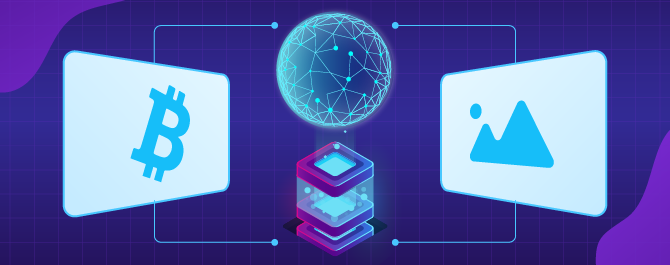
Moreso, crypto-specific ad networks are built to support Web3 advertisers with placements on crypto-focused websites and access to users who already understand wallets, tokens, and DeFi.
In multiple campaign analyses across the industry, teams noticed that traffic coming from crypto-native environments tends to be more qualified. Users are already familiar with the basics, so campaigns spend less time educating and more time converting.
2. Web3-Native Publishers
Crypto users spend most of their time in very specific environments, not across general websites.
Platforms such as blockchain explorers, charting tools, aggregators, and crypto news sites serve as decision hubs where users research and compare before taking action.
Across several active campaigns, placements in these environments consistently delivered stronger engagement. The difference comes from context. Users are already in research mode, which naturally leads to higher intent.
3. Wallet, Web3, and Audience Targeting
Targeting in crypto goes beyond traditional signals like interests or browsing history. It increasingly relies on wallet activity, token interactions, and on-chain behavior. At the same time, privacy changes are reducing the effectiveness of third-party tracking.
As a result, many campaigns now rely more on first-party data, publisher audiences, and on-chain signals. When combined, these inputs allow for more accurate targeting and better alignment with user intent.
4. Geo-Targeting for Regulatory Differences
Local regulations heavily shape crypto marketing, and those regulations vary widely across regions. Some countries allow broad promotion, while others require strict compliance or limit certain types of campaigns.
Because of that, geo-targeting becomes essential. Campaign data often shows clear differences in performance by region, including variations in CTR, costs, and conversion rates. That’s why successful strategies focus on localized campaigns instead of a one-size-fits-all approach.
5. Tracking Built for Web3
Measurement in crypto marketing goes further than clicks and conversions. It includes wallet connections, on-chain interactions, and token holder behavior over time.
To make sense of this, campaigns combine traditional analytics with on-chain data. Once these layers are connected, it becomes possible to track real outcomes, such as user activation and retention, not just traffic.
Market Cycles and Timing in Crypto Marketing
The crypto marketing strategy changes with the market because user behavior does too.
Sygnum’s research on crypto market phases describes the crypto market as heavily influenced by regimes that persist for a while before shifting, and notes that sentiment and psychology can dominate in an early-stage market.
We at Coinzilla also frame campaign behavior as reactive to market conditions and learning. Here’s how timing usually plays out.
Bull Markets

Bull markets tend to increase risk appetite, which means CTRs can improve, conversion cycles can shorten, and broader messaging can still work. At the same time, competition spikes, so CPMs and CPCs often climb. “More demand” sounds fun until finance asks why acquisition costs doubled.
Practical play: spend more on retargeting and conversion layers while you have fresh traffic, because late-stage intent is easier to monetize when the market mood is optimistic.
For example, Coinzilla’s retargeting offering is built around re-engaging users who bounced, which aligns with bull cycles when many prospects need a couple of touches before acting.
Bear Markets

Bear markets punish hype-first marketing. Sygnum’s cycle framework highlights fear- and disinterest-driven regimes and shows how market regimes shape which strategies work.
Practical play: bias toward education, proof, and product usage. Case studies, audits, real usage numbers, and “how it works” content tend to outperform big promises when trust is low.
Pre-Halving Cycles

Bitcoin’s halvings are protocol events that reduce the block of subsidy on a schedule, which can change market expectations and narratives.
Fidelity explains the halving as a recurring event in which Bitcoin issuance per block is cut in half every ~210,000 blocks, and academic research continues to examine the effects of halving windows on market behavior.
Practical play: treat pre-halving periods as a narrative season. Users search more, media volume rises, and “why now” content becomes easier to place and rank, especially if it’s actually useful.
Token Launch Windows

Token launches are mostly won or lost on sequencing. Shieldeum’s launch shows a clean cadence: pre-launch awareness, airdrop momentum, launch-week bursts timed to the exact moment, then post-launch creative updates for listings.
Practical play: plan a 90-day runway before and after TGE, and make sure the funnel is warm before you ask for money, wallet connects, or deposits. Plenty of token launch guides say timing and communication are critical around TGEs, even if the exact tactics vary.
The Future of Crypto Marketing
AI will change optimization, but it won’t replace fundamentals. Moreover, optimization will continue to improve creative testing and bidding decisions, especially as platforms lean into automation.
Privacy-first advertising will keep pushing teams toward first-party signals and contextual targeting.
Even more, Google announced it would end plans to fully phase out third-party cookies in Chrome, moving instead toward user choice, and later reporting described the retirement of remaining Privacy Sandbox APIs, which still signals major measurement change pressure.
Cookieless targeting remains a practical need across parts of the web, so crypto marketers are adapting with publisher-owned signals and on-chain context, as we discussed in our post-cookie marketing piece.
First-party and wallet-based signals will likely become the backbone for Web3 targeting. We explicitly position wallet-based targeting as part of Web3 advertising.
And, last but not least, performance APIs will matter more as teams want tighter control and reporting.
FAQ
A full-funnel mix tends to win: crypto display ads, PR distribution, community growth, SEO content, retargeting, and launch amplification. Coinzilla case studies repeatedly show multi-channel execution driving measurable outcomes.
Start with CTR and engagement by placement, conversion events like registrations or deposits, cost per acquisition, and assisted conversions in attribution paths. GA4 attribution paths are built to show multi-touch journeys for key events.
Visibility is the bottleneck. Web3-focused commentary regularly argues that projects fail when no one sees the launch, even if the product is solid.
GEO focuses on making content more likely to be surfaced or cited by generative engines, and researchers have proposed frameworks and benchmarks to improve visibility in those AI-generated responses.
Start with your audience research. The channel your users actually use is always the right starting point. If your research shows they primarily discover new projects through KOL YouTube videos, that’s your first channel. If they’re mostly on Reddit or niche Discord servers, start there. Don’t choose channels based on what feels right or what competitors are doing. Choose based on where your specific audience already spends time and attention.
Conclusion
Crypto marketing works when it’s structured. You need a clear funnel, the right mix of channels, and tracking that goes beyond clicks into real user actions like wallet connects, deposits, and retention.
Most campaigns fail because they rely on a single tactic, channel, or moment. The ones that win combine awareness, engagement, conversion, and retention into a single system.
If you want to see how that looks in practice, you can start with it and build from there.